
About the adder
Cannock Chase is regarded as the most important stronghold for adders in the English Midlands, yet you will be hard-pushed to see this secretive reptile.
On Cannock Chase, adders use a variety of heathland and open woodland habitats for foraging, breeding, basking and hibernating. Their prey is varied and normally comprises small mammals, though they can take small birds, lizards, amphibians and even invertebrates.
The adder can be readily identified by its distinctive zig zag back pattern. They are dimorphic, males having a black zig zag on a grey, silver or white background, and females a brown zig zag on a beige background. A small, stocky snake, adult adders typically range in length from 50 to 70cm.
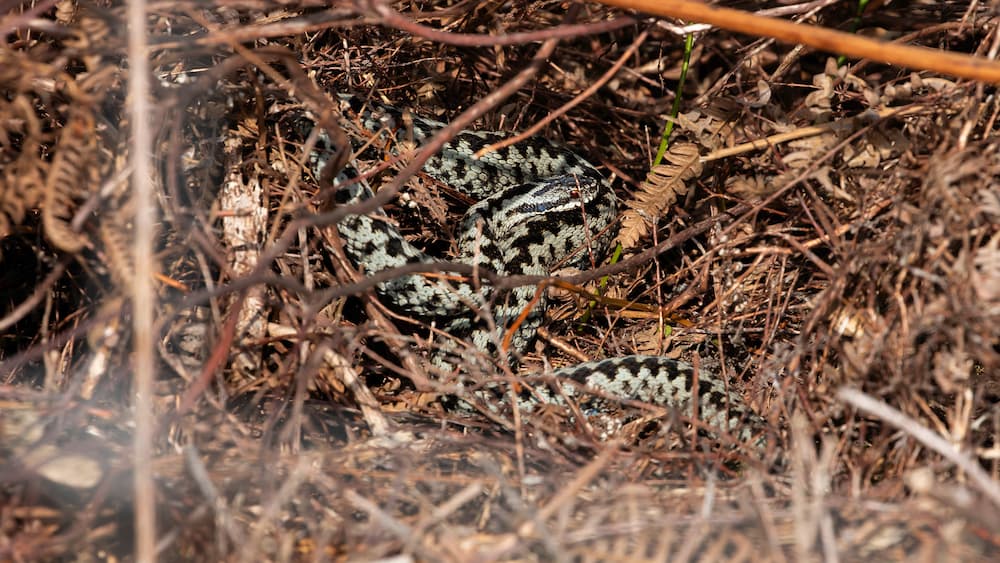
Female adders breed every few years, giving birth to 6-8 live young in August or September. The babies are orange or reddish in colour.
Adders are our only venomous snake, but they are not aggressive and usually only bite when provoked, stepped on or picked up. Always keep your dog on a lead or under close control on an adder site, and seek medical treatment in the event of a bite.
Adders are a protected species listed on schedule 5 of the Wildlife and Countryside Act 1981, and it is illegal to harm them in any way.
Action for adder on Cannock Chase
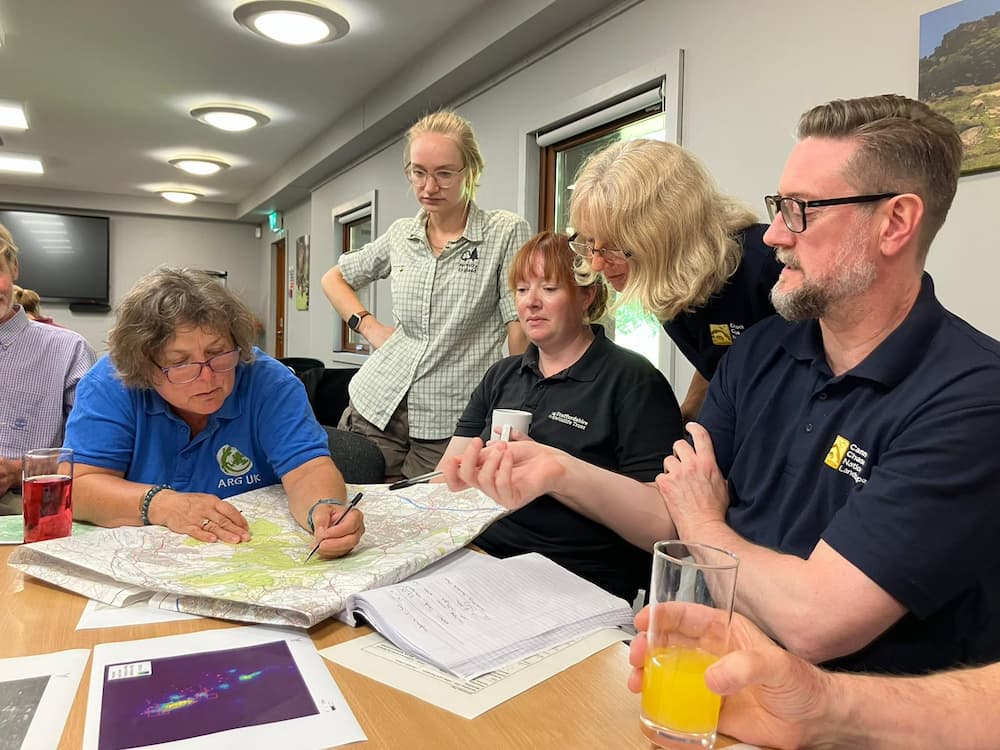
Adder conservation on the Chase has moved forward at pace in the last couple of years, thanks to the support of Amphibian and Reptile (ARG) UK and its local groups, as well as our local land managers and partners, and funding from the Farming in Protected Landscapes (FiPL) programme.
The project initially trained local volunteers to survey for adders to help ground truth a new ‘adder habitat suitability model’ developed by the UK Centre for Ecology and Hydrology (UKCEH). This enabled the identification of ‘good’ adder sites, as well as locations where fragmented habitats could be connected to encourage more sustainable and resilient adder populations. In the second phase of the project practical habitat works focused on creating new habitat features for adders, and improving site connectivity.
To date the project has collected a total of 419 adder records, including historic records from the late 1880s and early 1990s, through living memory records from 1960s/70s, to the present day surveys carried out under this project.
With support from land managers including: Forestry England, Staffordshire Wildlife Trust, Staffordshire County Council, Cannock Chase District Council, the National Trust at Shugborough Estate, the Mining Remediation Authority, Beau Desert Golf Club and New Hayes Farm, we are improving habitats and creating new heathland corridors for adders across Cannock Chase. Surveys show that adders readily move into these newly improved habitats. Excitingly, sightings also included newly born adders, suggesting that future generations are being safeguarded.
Next steps – the Cannock Chase National Landscape Partnership are working with our partners and landowners to develop a new Species Protection Plan for the adder. This will identify ways in which local communities, our visitors, land managers and policy makers can work together to cherish and protect one of our most special residents, and ensure that Cannock Chase remains a stronghold for the adder.
The film highlights the importance of this iconic, secretive and most remarkable creature and the everyday issues it faces. Cannock Chase National Landscape is lucky to be a haven and stronghold for this species.
Former coal miners from Lea Hall Colliery and a special adder poem written and narrated by Dr. Kuli Kohli feature alongside the starring role of the adder.

Protecting the species
We want people to enjoy visiting the Chase safely but please do keep dogs on leads and stick to paths, particularly from March to August when the adders will come out of hibernation and bask in the warm sunshine.
Imagery credit: Kevin Clarke and Steve Welch