
Advice and guidance
What does it cover?
The National Landscape Team has produced a range of advice and guidance for reference and use by policy and decision makers.
Our range of advice and guidance includes:
- Landscape designation and legislation
- Surveys, audits and assessments of the special qualities of Cannock Chase
- Planning advice
- Highways advice
- Key issues relating to the National Landscape
The documents are designed to assist a range of partners including local authorities, planning departments, developers, town and parish councils, land owners and managers when making decisions or carrying out activities relating to or affecting land within the National Landscape or its setting.
Technical documents
AONB Designation and Legislation
Natural England’s published guidance on the legal framework for AONBs, the approach to their designation, and the relevant governance and statutory procedures.
England’s Statutory Landscape Designations: A Practical Guide To Your Duty Of Regard 2010 (1 MB)
Natural England guidance to improve awareness and understanding amongst public bodies of their duty of regard to the purposes of National Parks and Areas of Outstanding Natural Beauty – indicating how these authorities can demonstrate compliance, and outlining the process by which they will be monitored.
Designation History Series 1999 (94 KB)
The Designation Order to confirm Cannock Chase Area of Outstanding Natural Beauty was confirmed on 16 September 1958. This document is one of a publication series written by the former Countryside Agency setting out the origins and designation histories of the nation’s AONBs.
Health and wellbeing
Dementia Friendly Strategy 2016-2021 (975 KB)
This strategy, developed through consultation and participation, sets out a vision for Cannock Chase AONB to become a dementia friendly community, with practical actions to improve access and enhance the experience for visitors to the area. It is aimed at those living with dementia with low to moderate needs and their family/friends who care for them.
Historic environment
Historic Environment Strategy 2026 (9MB)
The Historic Environment Strategy, entitled ‘Chase past, present and future’ sets out a framework for understanding, enjoying and caring for the historic environment of Cannock Chase, with an ambitious portfolio of projects to take forward.
Historic Environment Assessment 2015 (6 MB)
The landscape of Cannock Chase AONB has been forged by centuries of interaction between people and nature, and the historic environment is therefore fundamental to its special character. Over 600 heritage assets (both designated and undesignated) are currently recorded within the AONB.
This Historic Environment Assessment reviews the significance of this resource, and highlights the contribution of the historic character and heritage assets to the AONB. It sets out opportunities for the enhancement and/or management of heritage assets, the need for further investigations, and ways in which the history of Cannock Chase and the visitor experience can be enhanced through interpretation and education.
Chase Through Time 2018 (4 MB)
The Chase Through Time project (2016-18) explored the rich history of Cannock Chase using volunteers and archaeological investigations. This report describes the approach and findings of this partnership between Staffordshire County Council, Historic England and the Heritage Lottery Fund. Historic England’s contribution to the project is available as a separate report.
Horsiculture
Horsiculture Monitoring Within Cannock Chase AONB 2012 (1 MB)
This 2012 report repeats, and extends, the 2008 survey. It re-emphasises that horsiculture was becoming an increasingly significant land use within the AONB, and showed a slight improvement in the condition of sites surveyed in 2008 and 2012. It includes recommendations for equine managers to implement improved practices on their land.
Horsiculture Monitoring Within Cannock Chase AONB 2008 (153 KB)
Previous AONB Management Plans have highlighted concerns about increasing numbers of horses being kept within the AONB and their impacts on the landscape. These impacts were identified as the prevalence of horse paddocks, overgrazing and inappropriate fencing. The aim of this study was to provide a simple repeatable methodology to assess the impacts of horse keeping that would highlight trends and determine the extent and type of impacts on the landscape and environment of the AONB.
National Landscape branding
National Landscapes Brand Guidelines (2MB)
Inside you’ll find the different elements that make up the new National Landscapes identity system. This includes the logo, colour, typography, graphic language, iconography, illustration and photography styles.
Land management and biodiversity
Survey of the Aquatic Invertebrates of Cannock Chase’s Forest Stream 2023-24
The National Landscape commissioned Staffordshire Wildlife Trust to carry out a survey of the forest streams that drain off the Cannock Chase plateau to assess the invertebrate species that call them home. The presence, or absence, of particular invertebrate species can reveal a great deal about water and habitat quality and any adverse pressures they have been enduring. A method known as ‘biometric fingerprinting’ was employed which uses aquatic invertebrates to measure the overall water quality of rivers and streams.
Using this method, it is possible to identify any negative pressures (for example: nutrient loading, silt burdens, low flows, or pesticides) affecting the overall health of the watercourse reach and its inhabitants. Out of 11 watercourses surveyed 6 are rated good-moderate for their invertebrate quality (Oldacre, Sher, Old, Stafford, Fallow, Stony), 4 are rated moderate-poor (Rising, Shropshire, Brereton and Ben), and 1 is rated poor (Redmoor). Several nationally scarce invertebrate species were also recorded.
Results confirm Cannock Chase as nationally important for the globally-endangered White-clawed Crayfish. The survey has given us a new understanding of the water quality of the watercourses on the Chase and an overall assessment of the condition of the habitats along the stream corridors.
The full report can be found here and appendices to the report are below.
Appendix 1 Autumn 2023 Aquascience Consultancy Cannock Chase
Appendix 2 Aquascience Consultancy Ltd – Staffordshire Wildlife Trust Forest Streams Spring 2024 survey data and metrics
Peatland Potential
Peatlands are significant carbon stores, helping in the fight against climate change. They are also home to rare and characteristic wildlife species and are an important archive of past human activities. Penny Anderson Associates consultants have been helping us collate and analyse studies and data to identify existing peat deposits, and areas of interest which have the potential to contain peat. The final output details the presence and likely extent of confirmed peat deposits, and maps the areas of potential deposits, running on a sliding scale from areas of higher potential to areas with some evidence of the likelihood of potential deposits. The National Landscape includes 20.1 Ha of confirmed peat deposits with an additional 87.6 Ha identified for further investigation with high priority being given to potential peat deposits on the River Sow floodplain. Using this information, we can identify how best to protect and restore this important resource. Site-based investigations will be carried out in Phase 2 of the project in 2025/26.
The full report can be found here.
State of Bats Within Cannock Chase AONB and Surrounds (15 MB)
New research has shown that Cannock Chase provides a home for 9 out of Staffordshire’s 12 species of bat. Go out at dusk on the Chase and you stand a chance of seeing common and soprano pipistrelles, Natterer’s bat, whiskered bat, Brandt’s bat, Daubenton’s bat, Leisler’s bat, noctule and brown long-eared bat. Broadleaved woodland, parkland and wood-pasture, agriculturally unimproved grasslands and river corridors are the best places to look.
An Invertebrate Species Audit For Cannock Chase AONB Dated June 2021 (17 MB)
Annex 2 Cannock Chase Invertebrate Audit Post 1995 Species List
Annex 4 Cannock Chase Invertebrate Audit ‘Lost Species’
Thanks to the efforts of many dedicated invertebrate recorders over the decades, the heaths, forests, river valleys and historic parklands of Cannock Chase are known to be home to a variety of invertebrates including specialities like the small pearl-bordered fritillary butterfly, bog bush cricket, Welsh clearwing and green tiger beetle. New research carried out by ‘Buglife’, the Invertebrate Conservation Trust’ has pulled together and assessed all of these records collected over the last 25 years. For the first time we now have a picture of the value of the Chase for this fascinating group of creatures, including their distribution, conservation status and ‘hotspots’ for invertebrate fauna.
Landscape
Review of AONB Landscape Character Framework 2017 (975 KB)
An understanding of landscape character underpins the approach to planning and management within Cannock Chase AONB, ensuring that all decisions affecting the designation conserve and enhance the area’s special qualities. This framework describes the key elements and qualities that make up the distinctive landscape character of the AONB; the strength of their character and condition. A short vision statement summarises the overall aims of management for each landscape character type, supplemented by practical management guidelines to help planners and land managers tackle specific environmental and recreational issues.
The Cannock Chase Landscape 1994 (7 MB)
A landscape assessment of Cannock Chase prepared by the Countryside Commission in order to support the work of the (then) Joint Advisory Committee in its work to raise awareness and understanding of the special character and national importance of the AONB.
Peace and tranquillity
Peace and Tranquillity in the Cannock Chase AONB 2016 (2 MB)
Peace and tranquillity is recognised as a key indicator of the health of an Area of Outstanding Natural Beauty. In 2010 Cannock Chase AONB produced a series of tranquillity maps for the area. It was the intention that the study would be repeated every five years to coincide with, and inform, a review of the AONB Management Plan. This report presents the findings of the first 5-year review.
Peace and Tranquillity in the Cannock Chase AONB 2010 (975 KB)
Peace and tranquillity is recognised as a key indicator of the health of an Area of Outstanding Natural Beauty. This study applied a methodology for mapping peace and tranquillity within Cannock Chase AONB, involving local people to provide their own perceptions of tranquillity. The resultant series of tranquillity maps provides a baseline for monitoring and evaluating future management policies.
Tranquillity Mapping in Cannock Chase AONB 2007 (975 KB)
Peace and tranquillity is recognised as a key indicator of the health of an Area of Outstanding Natural Beauty. In 2007 the Cannock Chase AONB commissioned a short study to consider a methodology for mapping tranquillity across the area, building on best practice from CPRE and elsewhere. The findings informed the approach that was taken three years later in 2010 to map peace and tranquillity across the area.
Planning and highways
Guide for highways improvement and management 2025
The Guide seeks to ensure that the environmental impacts of highways and the ways in which they are maintained and improved, are sympathetic to the natural beauty of the National Landscape. It has been developed with the input of staff in Staffordshire Highways Authority.
Guidance for Local Planning Authorities (23 February 2026)
Guidance to assist local planning authorities in making planning policies and decisions in relation to the designated Area of Outstanding Natural Beauty or its setting.
Cannock Chase AONB Design Guide 2020 (15 MB)
The AONB Design Guide has been prepared in response policies and actions in the AONB Management Plan. It aims to promote good practice and encourage any future development to be landscape-led and sympathetic to existing character, so it does not detract from the natural beauty of the AONB.
The Design Guide is for anyone proposing new development as well as those preparing local plans and other community planning guidance that has the potential to affect Cannock Chase AONB.
Cannock Chase AONB Views and Setting Guide 2020 (36 MB)
The AONB Management Plan recognises that wide-ranging uninterrupted views from the AONB are one of the AONB’s special qualities. Views towards the distinctive profile of Cannock Chase are also an important attribute within the surrounding area.
The AONB Views and Setting Guide provides a guide to help ensure that the surroundings of the AONB are developed and managed in ways that conserve and enhance its significance and inherent special qualities.
Car Park Improvements: A Guide To Key Landscape Principles 2021 (2 MB)
The guide sets out planning and environmental considerations that should be taken into account when planning and implementing alterations or car park closures on Cannock Chase AONB, along with key landscape principles, such as layout, detailed design, signage and restoration of car parks and laybys if these are closed.
Light Pollution and Dark Skies in the Cannock Chase AONB – A Good Lighting Guide 2023
The purpose of this guide is to raise awareness of dark skies, their social, environmental, and economic benefits, and to demonstrate how simple changes to the way we light our homes, businesses and neighbourhoods can have big impacts. It provides information and advice to individuals, businesses and decision makers interested in reducing and avoiding light pollution so that we keep Cannock Chase special.
Visitor management
Cannock Chase Special Area Of Conservation
A small area of Cannock Chase is designated as a Special Area of Conservation (SAC). The Cannock Chase SAC is one of the best areas in the UK for European dry heath land and is the most extensive in the Midlands region.
An extensive evidence base of visitor surveys, visitor observational and recreational impact studies has been collected over the past decade. These have informed the preparation of Detailed Implementation Plans for car parking and site users on the Chase to mitigate visitor impacts.
Visitor Management Strategy 2015 (2 MB)
Cannock Chase is a popular visitor destination, receiving over 2.5 million visitors a year. The numbers of visitors is anticipated to increase, with implications for the special qualities of the AONB, the ability of the visitor infrastructure to cope with this additional demand, as well as compromising the quality of the visitor experience. This strategy reviews recreation activities within the AONB and likely trends and impacts, and proposes priority areas for action and a delivery programme.
Visitor Survey Analysis 2012
Volume 1: Technical Report (4 MB)
Volume 2: Appendices (6 MB)
To help understand patterns of recreational use on Cannock Chase AONB, a survey of visitor numbers and usage across the Chase was carried out over a twelve month period between September 2010 and August 2011. Data was compared against the first visitor survey on Cannock Chase AONB carried out in 2000 in order to establish any trends and changes in pattern of use over the 10 year period. Interpretation of the survey findings prompted a review of visitor and recreational management across the AONB, which identified a range of strategic issues requiring further investigation.
Cannock Chase AONB Visitor Survey 2000 (4 MB)
The first visitor survey on Cannock Chase was conducted in 2000. Its broad aim was to gather comprehensive and up-to-date factual information on usage of the AONB, together with a range of views and opinions of users on ways in which the public enjoyment of the Chase might be facilitated. Key areas of enquiry included the identification of the profile of visitors; the characteristics of their visits; their patterns of spending and the associated economic impacts; the reasons for visiting and the expectations of the visit; and the identification of problems and issues for management. The survey findings contributed to the production of a new AONB Management Plan.
Our work
Our work is wide-ranging and spans across our four integrated strategic aims for Nature, Climate, People and Place.
You can find out here about the current projects we are working on, how our funding streams can support you and discover the variety of advice and guidance that is available, including resources to download.
Latest news
The news posts below provide more information on work in progress and latest news of Cannock Chase and our partners.
Take a look at the latest Cannock Chase National Landscape e-newsletter for May 2026. Booking is now open for the Annual Conference 2026. You can find
...
Join us for Cannock Chase National Landscape Annual Conference 2026, and a day of networking, learning and sharing ideas! This year’s conference is being held
...
Take a look at the latest Cannock Chase National Landscape e-newsletter for April 2026. The National Landscape offers a range of grants that can help
...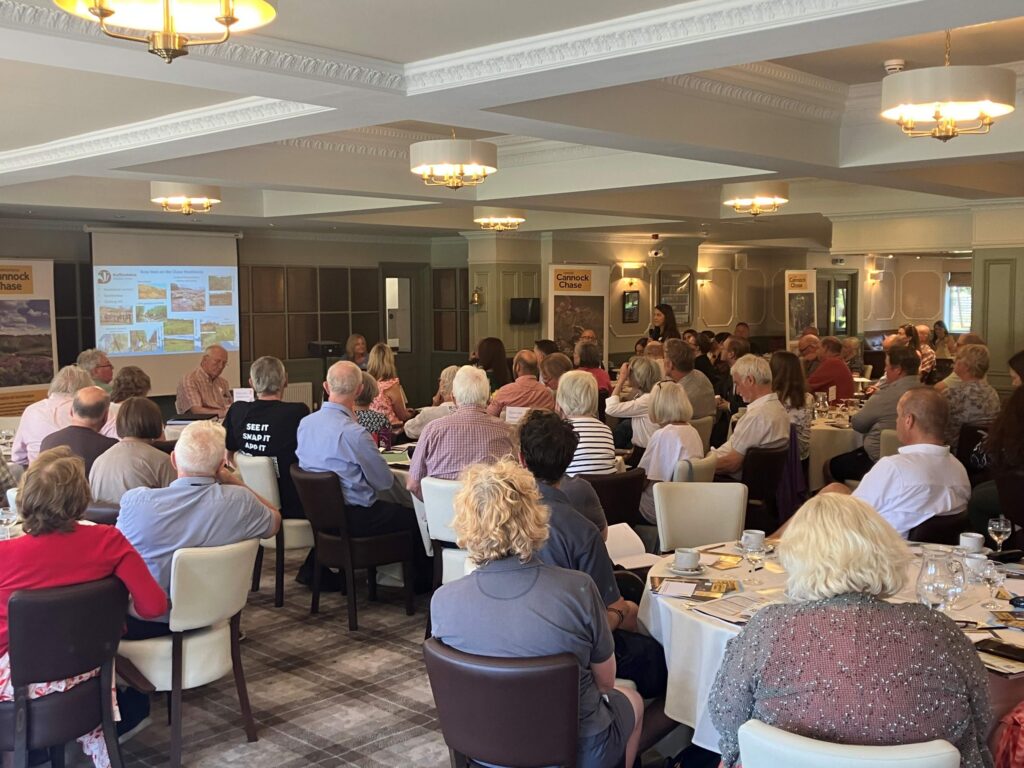
We are pleased to announce that the Cannock Chase National Landscape Annual Conference will be held on Wednesday 3rd June 2026 at the Aquarius Ballroom,
...
Take a look at the latest Cannock Chase National Landscape e-newsletter for March 2026. The e-newsletter will keep you up to date on news from
...
This is a face-to-face meeting taking place on Monday 16th March 2026 at 2pm at the Main Conference Room, Staffordshire Wildlife Trust, Wolseley Centre ST17
...